
César Chávez
(1927–1993)
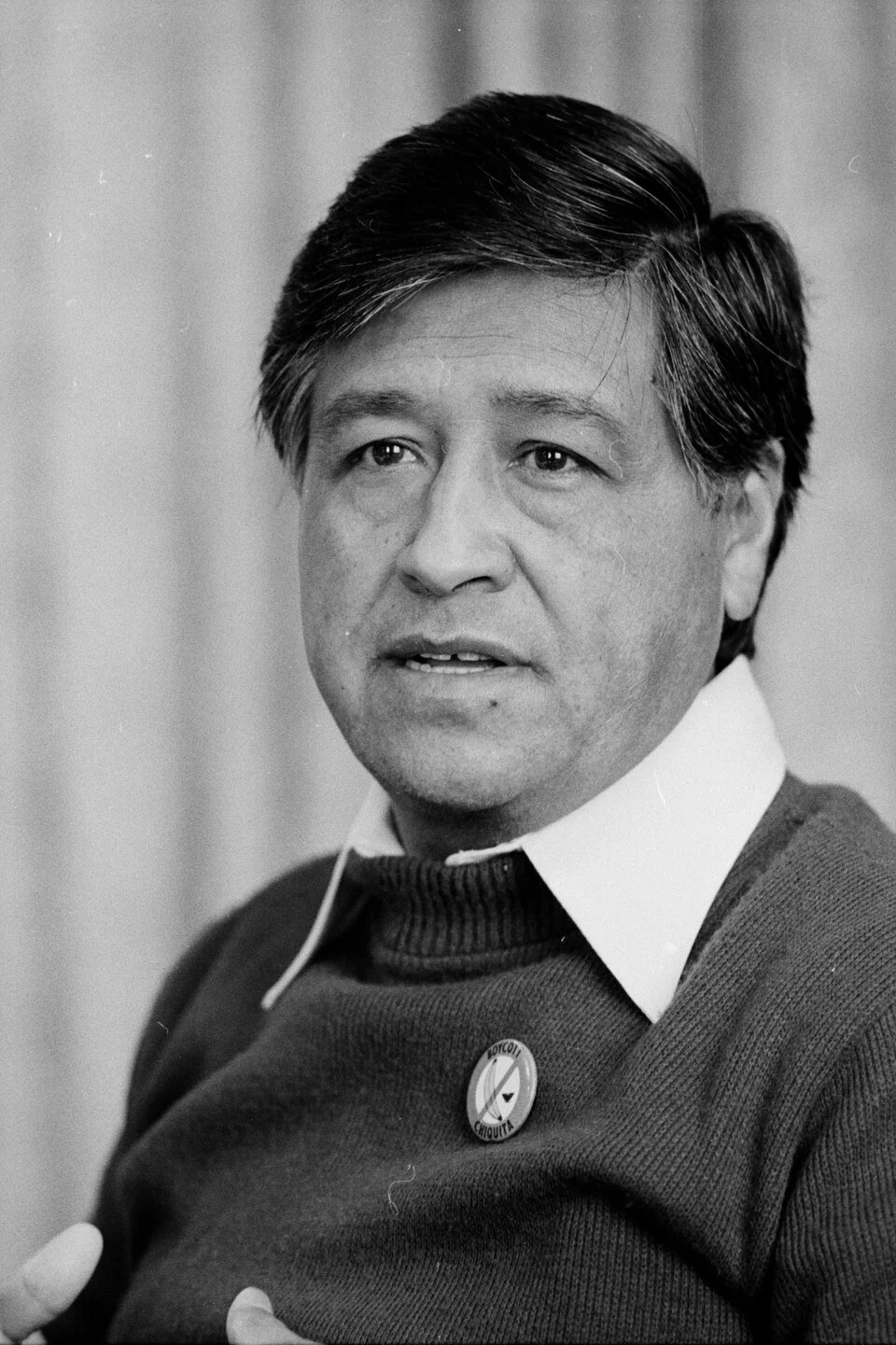
César Estrada Chávez was born in 1927 near Yuma, Arizona, where his family owned a small farm. During the Great Depression they lost their land and became migrant farmworkers in California, moving from harvest to harvest. Chávez attended dozens of schools before leaving after the eighth grade to work in the fields full time. After serving in the Navy, he settled in Sal Si Puedes, a poor Mexican American neighborhood in East San José. There he met organizer Fred Ross and joined the Community Service Organization, where he learned grassroots organizing through house meetings and voter registration drives that brought thousands of Mexican Americans into the political process for the first time.
In 1962 Chávez left the CSO to pursue his dream of organizing farmworkers, who were excluded from federal labor law and had no legal right to unionize. With Dolores Huerta, he founded the National Farm Workers Association in Delano, California, building it slowly, one family at a time. In 1965, Filipino grape workers led by Larry Itliong walked off the job, and they asked Chávez’s union to join them. Together they launched the Delano grape strike, and the two groups soon merged to form what became the United Farm Workers. In 1966 Chávez led a 340-mile march from Delano to the state capitol in Sacramento, drawing national attention to the farmworkers’ cause.
Chávez’s greatest innovation was turning a local strike into a national movement. The UFW asked Americans to stop buying grapes, and millions did, bringing together churches, students, civil rights groups, and other unions. Committed to nonviolence, Chávez fasted for 25 days in 1968, and Senator Robert F. Kennedy came to Delano to break bread with him when it ended. In 1970, grape growers signed historic contracts that raised wages, created health benefits, and protected workers from dangerous pesticides. The farmworker movement then won political power as well: in 1975, California passed the Agricultural Labor Relations Act, the first law in the nation guaranteeing farmworkers the right to organize and bargain collectively.
Chávez’s legacy is not without controversy. He opposed undocumented immigration, and the union at times reported undocumented strikebreakers to immigration authorities, a stance that clashes with the movement’s values today. His later years also saw internal conflicts and falling membership. Chávez died in 1993 and was awarded the Presidential Medal of Freedom the following year. For organizers today, his life offers lasting lessons. Political power begins with registering and organizing community members, solidarity across racial and ethnic lines makes workers stronger, and when workers can’t win alone, the public can become their ally.