
Dolores Huerta
Born 1930
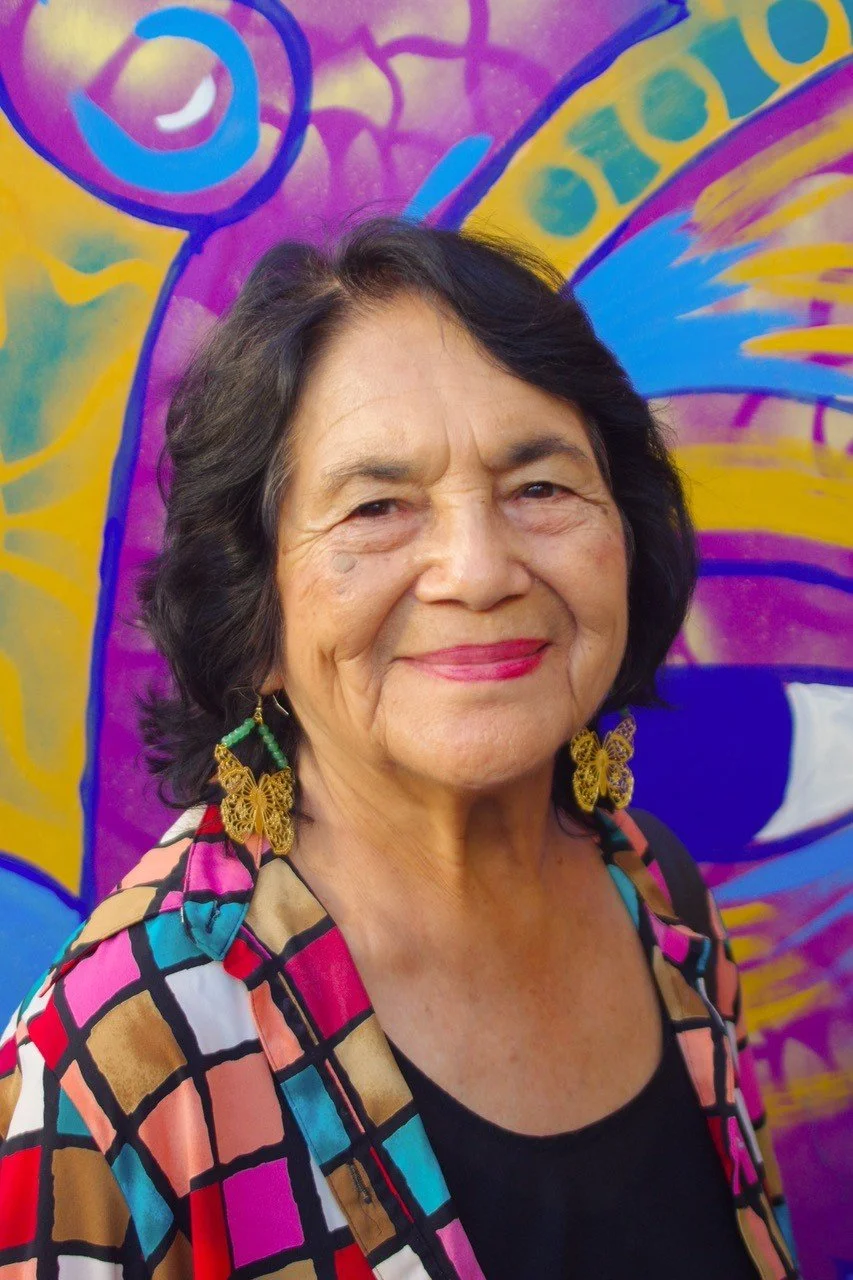
Dolores Huerta was born in 1930 in Dawson, a small mining town in New Mexico. Her father was a farmworker and miner who later became a state legislator. After her parents divorced, she grew up in Stockton, California, raised by her mother, who worked in restaurants and canneries before buying a small hotel and restaurant that served farmworker families. Huerta became an elementary school teacher, but seeing farmworkers’ children come to class hungry convinced her she could do more by organizing their parents. In 1955 she helped found the Stockton chapter of the Community Service Organization, where she registered voters, fought for community improvements, and lobbied lawmakers in Sacramento. Through that work she met César Chávez.
In 1962, Huerta and Chávez cofounded the National Farm Workers Association, which grew into the United Farm Workers. She was a key organizer of the 1965 Delano grape strike and led the effort to build the national grape boycott, organizing support in New York and other cities. As the union’s lead negotiator, she sat across the table from powerful growers and secured the historic contracts of 1970, which brought higher wages, health benefits, and protections from dangerous pesticides. She also coined the rallying cry “Sí, se puede,” meaning “Yes, we can,” which has since become a slogan for movements across the country.
Huerta understood that workers needed political power to protect what they won. She lobbied for the 1975 Agricultural Labor Relations Act, which gave California farmworkers the right to organize and bargain collectively for the first time. She paid a personal price for her activism. In 1988, she was severely beaten by San Francisco police during a peaceful protest, suffering broken ribs and a ruptured spleen. She served as vice president of the UFW until 1999 and later founded the Dolores Huerta Foundation, which trains community organizers and advocates for working families. In 2012 she received the Presidential Medal of Freedom.
Huerta continues to inspire the movement in her nineties. In March 2026, she spoke out about sexual abuse she suffered from César Chávez decades earlier, saying she would no longer stay silent. California now honors her on April 10, her birthday, as “Dolores Huerta Day.” At 96, she received the AFL-CIO’s first “Sí Se Puede” Award at the federation’s 2026 convention, where she urged union leaders to look past their differences and keep organizing. For organizers today, her life offers lasting lessons. Workers win at the bargaining table and in the halls of power, women’s leadership has always been at the heart of the labor movement, and the courage to speak the truth, even about our own movement, makes us stronger.