
Samuel Gompers (1850–1924)
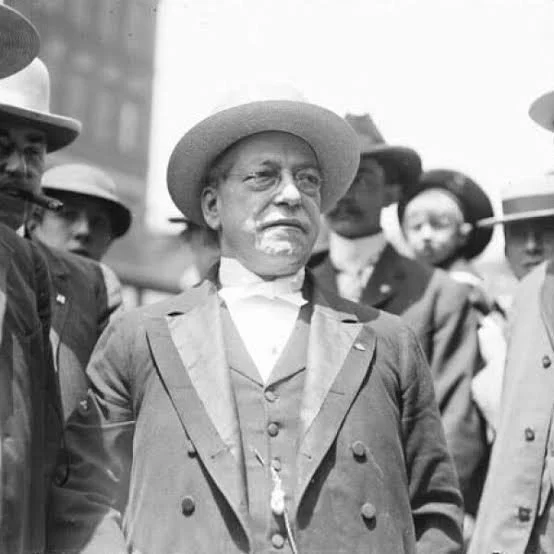
Samuel Gompers was born in London in 1850 to a working-class Jewish family and came to New York City at age 13. He followed his father into cigar making, a trade where workers often read and debated politics on the shop floor. Gompers joined the Cigar Makers’ International Union as a teenager and soon became a leader of his local. From that experience he came to believe that workers’ strength depended on strong, disciplined, well-funded unions that could survive hard times and win concrete gains.
In 1886, Gompers helped found the American Federation of Labor (AFL), a federation of skilled trade unions, and served as its president for all but one year until his death in 1924. Under his leadership, the AFL focused on what Gompers called “pure and simple” unionism: higher wages, shorter hours, and safer working conditions, won through collective bargaining and the strike. Asked what labor wanted, he answered simply: more. That focus built the AFL into the largest labor organization in the country, with millions of members by the end of his life.
Gompers also understood that what unions won at the bargaining table could be taken away by courts and politicians. Instead of creating a labor party, he set out a strategy summed up as “reward your friends and punish your enemies,” backing candidates of any party who supported workers and opposing those who didn’t. In 1906, the AFL presented Congress with a list of labor’s demands and campaigned against hostile lawmakers. That approach helped win the Clayton Act of 1914, which Gompers hailed as protection for unions against antitrust prosecution, though courts later limited it. His model of nonpartisan endorsement still shapes how unions approach elections today.
Gompers’ legacy is powerful but complicated. His focus on skilled craft workers left out many unskilled workers, women, and Black workers, and he supported racist immigration restrictions against Chinese workers. These choices weakened worker solidarity, and the CIO later challenged them by organizing everyone in an industry. For organizers today, Gompers offers two lessons: workers’ power has to be built both at work and at the ballot box, and a movement is only as strong as the workers it is willing to include.